
If you are planning cosmetic surgery, you will probably see the words "Level 4" on aftercare pages, including ours. It sounds reassuring, but what does it actually tell you, and why should it matter when you are choosing who looks after you in the weeks after your procedure?
Here is how we explain it to clients who ask.
Post-surgery drainage is not a standard massage
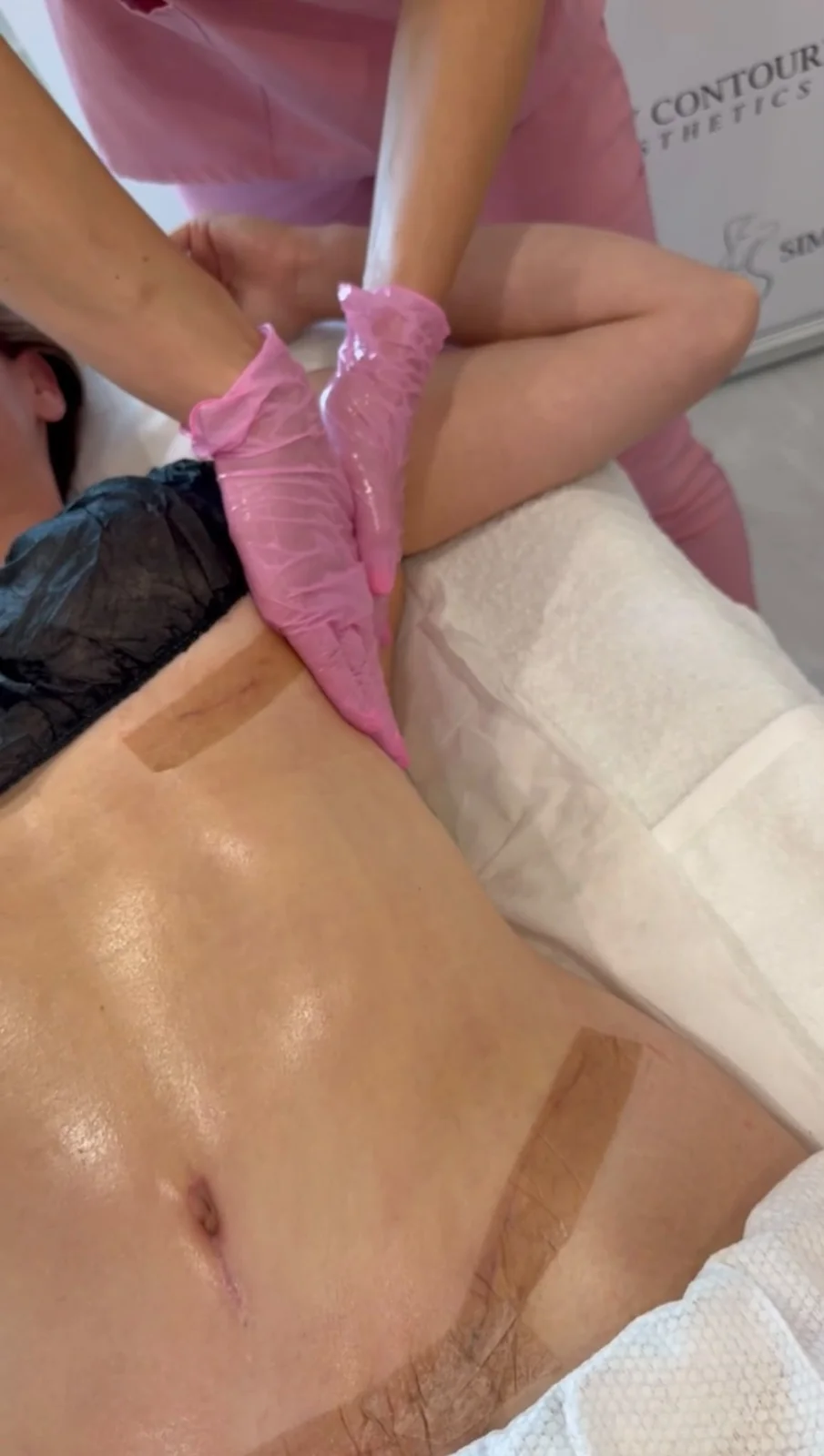
Post-operative lymphatic drainage massage is a specialist treatment designed specifically to support your body through the recovery process after cosmetic surgery. It is different from a standard lymphatic drainage massage.
After surgery such as liposuction, a tummy tuck, fat transfer or a BBL, your body will naturally experience swelling and a build-up of excess fluid. You are not coming in for a relaxing wellness treatment on a body that feels as it normally does. You are coming in while your body is healing, and the treatment needs to support you through the different stages of that recovery.
That is why we always say it is important to choose a therapist who is appropriately trained and experienced in post-surgical aftercare.
What Level 4 means for us
We are Level 4 Advanced Specialists in Post-Operative Lymphatic Drainage Massage. Our specialist training is focused on supporting clients throughout their cosmetic surgery recovery.
In plain terms, the level tells you how far the training goes. Ours is advanced training in post-operative lymphatic drainage specifically, rather than a general introduction to massage or to lymphatic drainage as a wellness treatment.
So when you see Level 4 on our page, it means the person treating you has trained specifically in post-surgical aftercare, which is exactly the type of care you need in the weeks after your procedure.
Why it matters to you
The recovery period following cosmetic surgery is an important part of achieving your desired final result. Your surgery is only one part of the process. The aftercare you receive afterwards is also extremely important in supporting your recovery.
Appropriate post-operative aftercare can help support your body's natural healing process and encourage the movement of excess fluid, while supporting a smoother and more comfortable recovery.
Getting that right depends on the person treating you understanding post-surgical care: when treatment can begin, how often you are likely to need it, and how to adapt your plan as your body heals. Specialist training is what gives you that.
Questions worth asking before you book
Whoever you choose for your aftercare, these are good questions to ask. Here is how we would answer them.
What training do you hold in post-operative drainage? Ask specifically about post-surgical training, not just lymphatic drainage in general. Ours is Level 4, as Advanced Specialists in Post-Operative Lymphatic Drainage Massage.
When can I start? Your massages can generally begin from three days after surgery, providing you have been cleared for treatment by your surgeon and there are no complications or contraindications. We go into this in more detail in when can you start lymphatic drainage after surgery.
How many sessions will I need? Every recovery is different. It depends on the type and extent of your surgery, the number of procedures performed and how your body is healing.
Will my plan be tailored to me? It should be. No two recoveries are the same, so your treatment plan will always be guided by your individual needs.
Can I book before my surgery? With us, yes, and we recommend it.
How our training shapes your aftercare
As a general guideline, we recommend two massages per week for the first four weeks, followed by one massage per week after that, depending on your recovery and progress.
A minimum of six to ten treatments may be recommended following surgery, although this is only a guideline and some clients may need more. Having just one or two massages after major surgery is generally not enough to give your body the ongoing support it may need. Consistency is key, particularly during those first few weeks.
Most clients choose to begin with a course of five treatments. This lets us monitor your progress and assess your recovery before deciding on the next stage of your aftercare together.
Appointments are one hour. Please allow the full hour, as the hands-on time is slightly less to allow for consultation, preparation, changing and any aftercare advice.
A single post-surgery session is £140, and a course of five is £550. You can see everything on our pricing page.
Adding red light therapy
We also recommend 360° red light therapy as part of your post-operative recovery, alongside your lymphatic drainage treatments, once your surgeon has cleared you. It is used to support the body's natural healing processes.
Our post-op red light packages are 5 sessions for £150 or 10 sessions for £275. They are only available to our post-op clients, as a one-off package to add to your aftercare, and you have three months to use your sessions. They are booked through Fresha at our sister clinic, Simply Contoured Wellness.
What accreditation does not change
Specialist training is important, but it has limits, and we think you should know them.
Your surgeon is in charge of your medical care. Our treatment works alongside their advice, never instead of it. If you notice a new or unexplained swelling, or anything about your recovery worries you, contact your surgeon or GP first.
Training also cannot promise a particular result. Every body heals in its own way, which is why we adapt your plan as you go rather than following a fixed formula.
Book your aftercare early
We strongly recommend arranging your appointments as soon as your surgery date is confirmed. Post-operative appointments can book up quickly, particularly around popular surgery dates and times of year.
Having your aftercare in place before your procedure means you can focus on resting and recovering, knowing your treatments are already sorted. If you are not sure how many sessions you need, get in touch. We can talk through your surgery and suggest a suitable starting plan.
Your comfort, safety and recovery are always our priority.